Ukraine

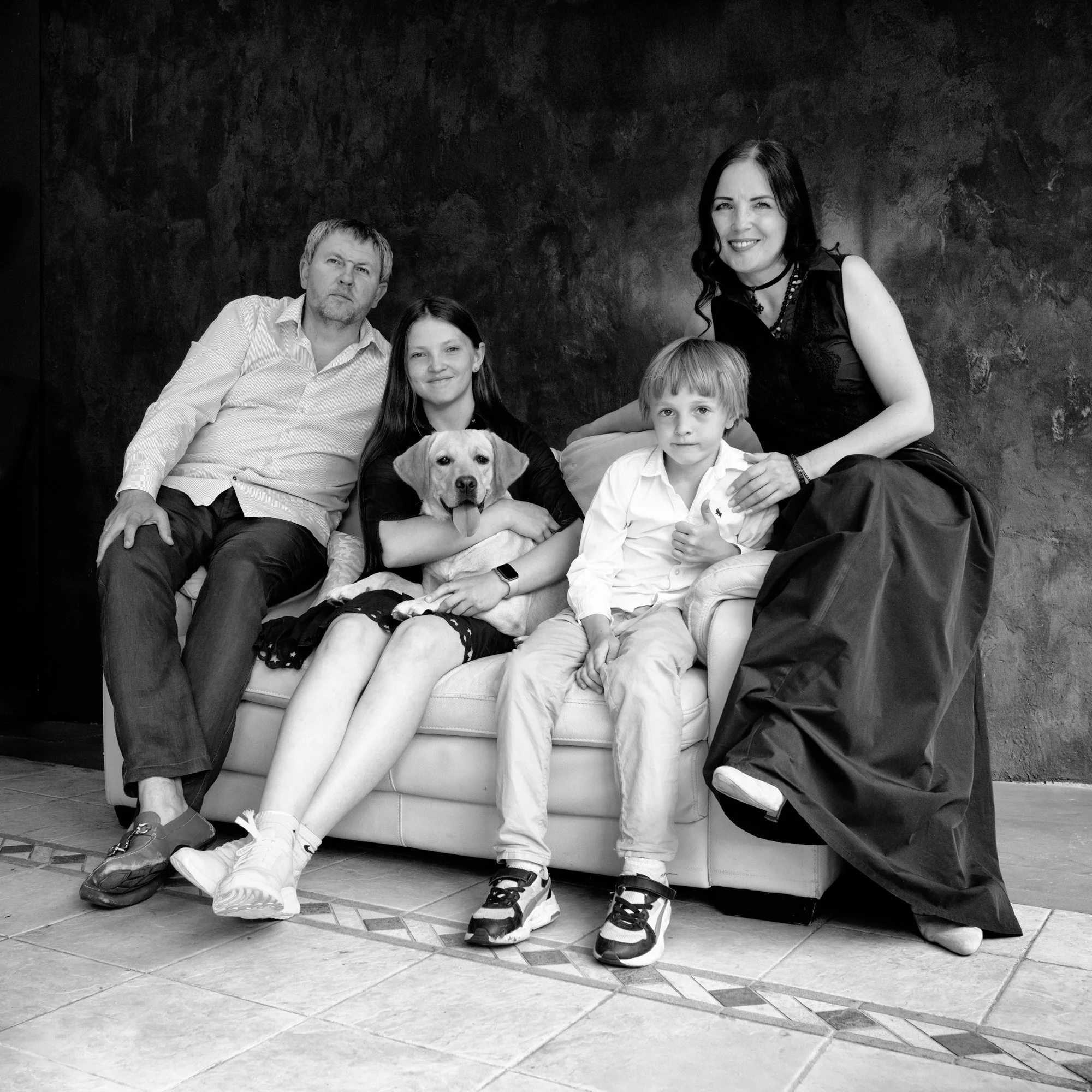
Ukrainians in search of safety: Hanna and family

Hanna and her family in The Netherlands.

My name is Hanna and I’m from Dnipro, a large industrial city in eastern Ukraine. Until early 2022, I lived a full and successful life. I ran my own marketing and advertising agency, worked with major international brands, and was involved in social projects and campaigns. At the same time, I taught marketing, communication, and public relations at the university – something I truly enjoyed. Together with my husband and our three children, we lived a comfortable life. We were entrepreneurial, creative, and engaged in our city.

The unrest began already in 2014, during the Maidan Revolution. It affected me deeply. Young people flooded the streets, dreaming of a European future for Ukraine. That dream was violently crushed. I still remember crying every evening while watching the news. The deaths of young protesters felt personal. That was the moment I understood: we are a people who must fight for freedom, for justice.

When Russia invaded Ukraine on February 24, 2022, everything changed. Our whole family — sixteen people in total — took shelter in a basement. We didn’t live far from the Zaporizhzhia nuclear power plant, and when it came under fire, the fear really hit us. There were rumors of a possible nuclear disaster. Doctors gave instructions on television about how to apply iodine to children’s skin to protect them from radiation. My children saw the panic in my eyes. On the ninth day of the war, I made the decision: we had to flee.

We left Dnipro in five cars. Normally, the drive west would take ten hours — it took us five days. The roads were packed with people like us — desperate, afraid, heading into the unknown. We taped signs reading “CHILDREN” to our car windows, hoping Russian pilots would see we were innocent civilians.

Eventually, we made it to Roermond in the Netherlands, where an old friend offered us shelter. My husband stayed behind at first, to take care of his parents and our business. He only joined us in Roermond nine months later.

Once I arrived, I couldn’t sit still. That’s not who I am. I volunteered at my children’s primary school, working as an interpreter and piano accompanist. Later, I became a coach for Ukrainian employees at La Place, taught at Stedelijk College, and began working as a project leader at the Ukrainian House in Maastricht.

Since October 2023, I’ve been working as a counselor for Ukrainian families in Limburg. I help people integrate, with paperwork, schools, doctors, and government agencies. The work is intense, but rewarding. I know where they come from. I know what it means to leave everything behind.

I feel happy here. In Ukraine, we lived well, but life was stressful and competitive. Here, we’ve found peace. My children are integrated at school, my husband works as a chef, and we are slowly building something new. Still, the future is uncertain. I don’t know if we’ll be allowed to stay. That’s hard, but we do our best, we work, we contribute. We are happy here.

What I’ve experienced is not unique. Hundreds of thousands of Ukrainians carry stories like this. But I hope mine shows just how deeply war affects a human life — and how much strength it takes to start over, in a foreign land, with a foreign alphabet, but with the same hope: a safe life for our children.
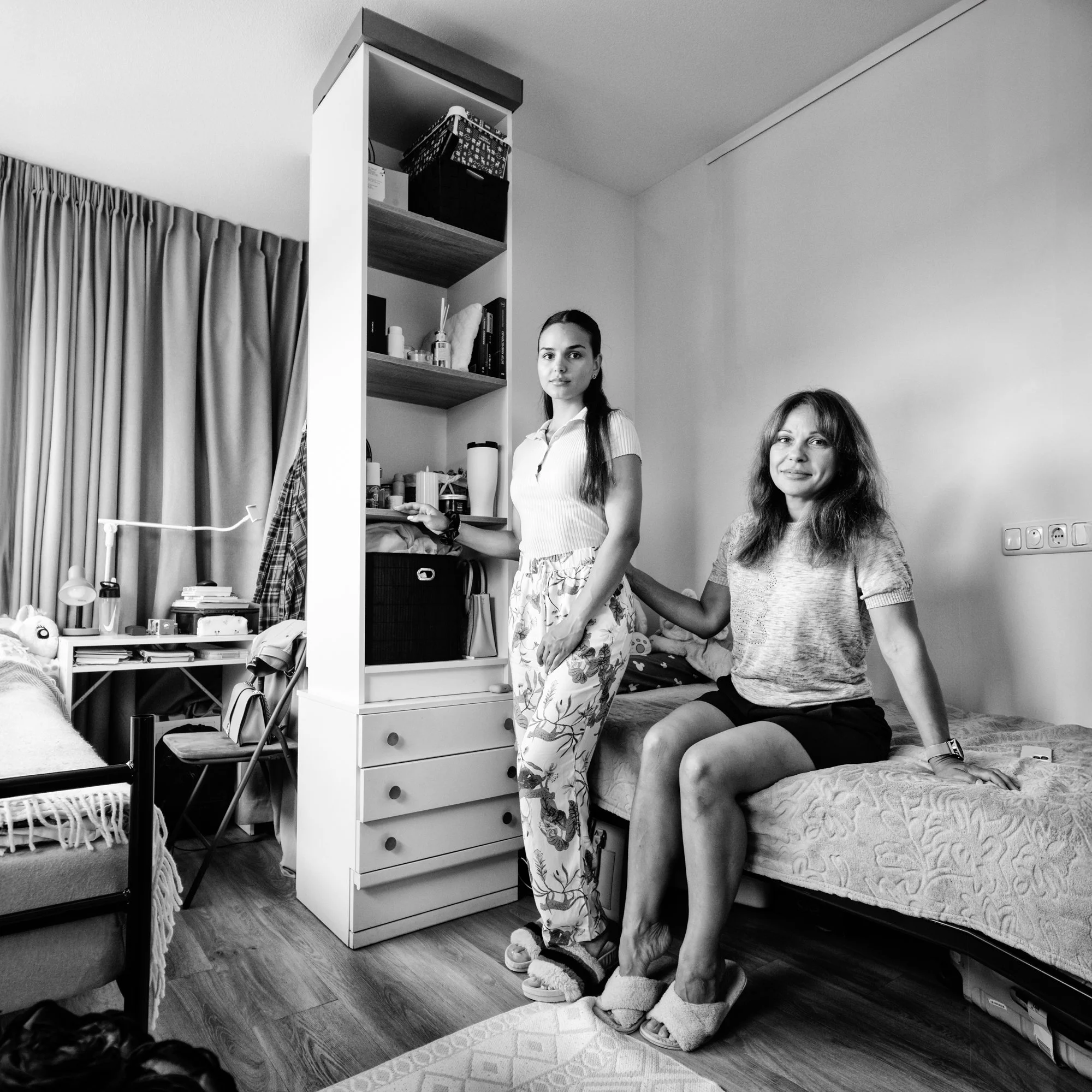
Ukranians in search of safety: Sofiia

Sofiia and her mother in The Netherlands.

I’m Sofiia, 18 years old, and I’m from Kharkiv, a city in eastern Ukraine, close to the Russian border. Until February 2022, my life was what you’d expect for a 15-year-old girl. I went to school, played sports, had friends, made plans. My world felt safe and simple — or so it seemed.

That all changed on February 24. My mother woke me up that morning and said: “Sofiia, the war has started. You’re not going to school today. We have to pack.” At first, I didn’t understand. As a kid, I even thought: no school, maybe I can stay in bed a bit longer. But then we spent days sleeping in the bathroom, between two thick walls. I heard bombs. I saw tanks passing by. We lived on a major road from Russia. Anything could happen at any moment.

My parents and I fled westward. What should have been a one-hour drive took eighteen hours. We slept in gyms, schools, and in places where strangers opened their doors to those in need. Eventually, we arrived in Chernivtsi, near the Carpathian Mountains. That’s where we made a decision that split my life in two: my mother and I would go to the Netherlands, while my father stayed behind. He couldn’t abandon his company or his employees. It broke our hearts, but there was no other option.

Through a friend of my mother’s, we ended up in Roermond. My mother didn’t speak any English, so I took on all the responsibility — documents, meetings, housing. I was fifteen, but suddenly I was no longer a child. In Ukraine, I had never been especially ambitious. But something shifted. I started school at Nt2 Mundium College in Roermond, a school for newcomers. The teachers saw me, supported me, and believed in me. They gave me confidence. I began learning Dutch, took extra courses, and became interested in marketing and international business. Things started to go well.

I now work part-time in an outlet store and volunteer at the Holland Ukrainian House in Maastricht, and a volunteer social media assistant at Meet Maastricht. I’m also doing an online university degree from Ukraine while preparing for a new chapter: I’ve been accepted to Maastricht University to study International Business. The admission process wasn’t easy — I didn’t meet all the requirements, had to submit extra documents, file an appeal, and prove my motivation. But I made it!

And still… everything I’m building here, I carry with mixed feelings. My father still lives in Kharkiv. His company is still running, our old apartment is still there — as if an angel is watching over it, because several bombs have fallen nearby. He lives under constant stress. When he visits us in Roermond, he even says he misses the adrenaline of danger. “You get used to it,” he says. But I also see what it’s done to him — how his thinking has changed, how heavy it all is for him.

My mother struggles. She’s trying to learn the language, but with no clarity about whether she can stay in the Netherlands, it’s hard for her to make decisions about her life. She doesn’t know whether her future lies here or back in Ukraine. Everything is uncertain. I try to support her — as I’ve done from the beginning. But I see how hard it is for her to live in this world of insecurity, without her home, her friends, her husband, her sense of certainty.

My older sister now lives in Spain with her husband and three children. They happened to be there on holiday when the war started, so they didn’t have to flee in a panic. They’re building a new life in Valencia. My cousins are scattered across Europe. Our family has been torn apart.

I don’t know what the future holds. I’d like to stay in the Netherlands — I feel at home here. I’m learning, growing, and I want to give something back. But for now, I only make small plans. After the war, you learn that everything can change in an instant. You become flexible — maybe too flexible. I always need a plan B.

War doesn’t just change your country. It changes your mind, your heart, your family. And still, I try to look forward. Because I’ve learned to. Because I have no other choice. Because I believe that building — even in small steps — is the only way not to break.

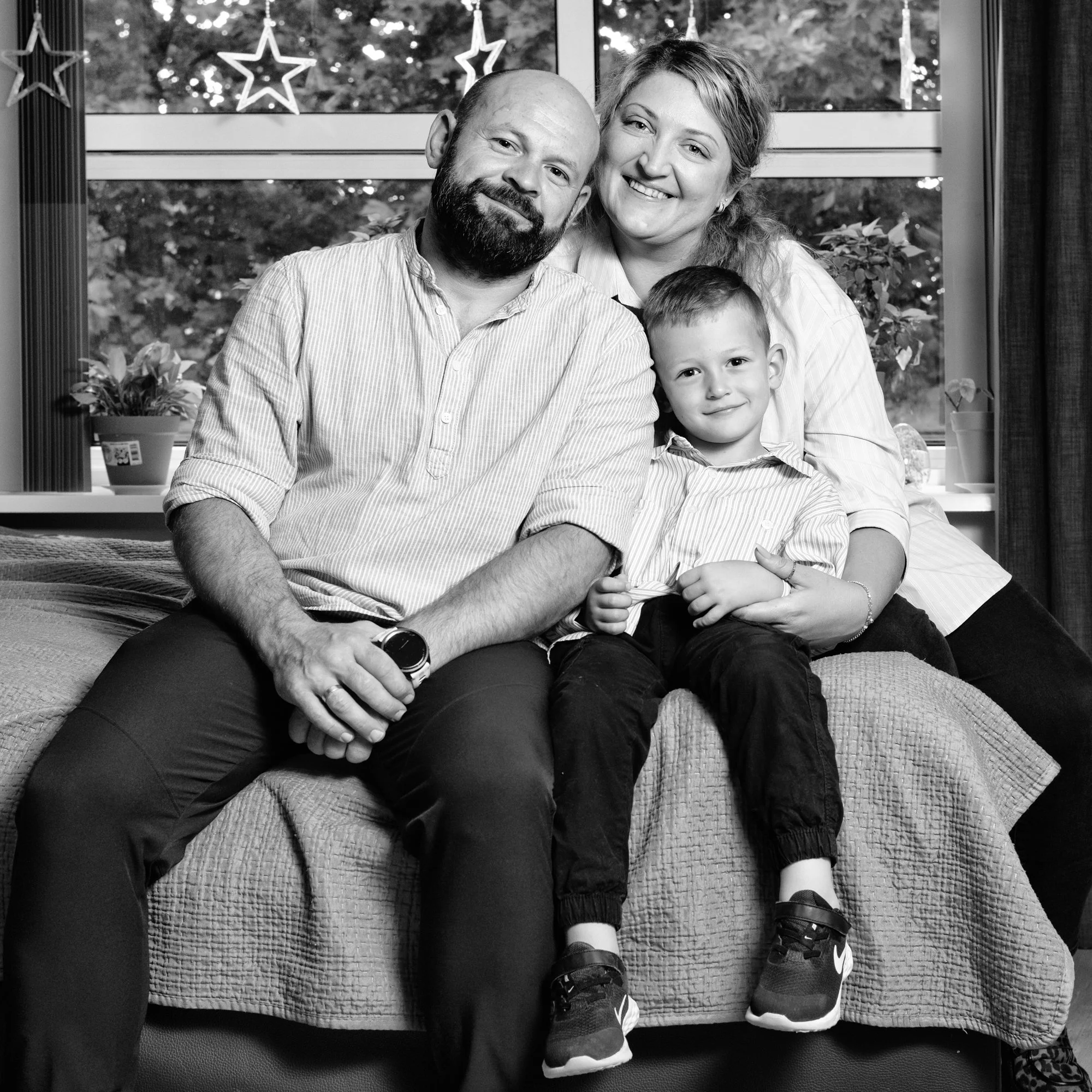
Ukrainians in search of safety: Svitlana and family

Svitlana with her husband and son in The Netherlands.

My name is Svitlana. I’m 40 years old, married, and the mother of a four-year-old son. Until February 2022, I lived a quiet and happy life in Chornobaivka, a village in the Kherson region in southern Ukraine. I owned my own nail studio, had worked as a manicure and pedicure specialist for seventeen years, and held a master’s degree in management. After my maternity leave, I dreamed of working in government. My husband and I were building our future: a beautiful, light-filled home for our family, full of plans and hope.

But everything changed on February 24, 2022.

That morning, the Russian invasion of Ukraine began. In the first few days, we didn’t understand how serious it was. My son was almost one year old – his birthday is on March 1. We decided to move in with my parents, as their house seemed safer than our fifth-floor apartment. But the violence reached us there too. We heard bombs, saw helicopters flying low overhead. Our house was hit by a rocket. The windows shattered. We had to flee to the basement, where we lived for three months.

That’s when the Russian occupation of our region began. It became a blockade. There was almost no food, no diapers, no baby formula. My parents and I ate only once a day, so my son would have enough. We slaughtered chickens, geese, and ducks. One neighbor found a small piece of turkey in her freezer – I cried with gratitude that I could give it to my child.

After three months, I knew we had to flee. I knew people who had tried and died, their cars hitting landmines. I was terrified. But staying might be even more dangerous. My husband was already in Europe and kept asking if I could come with our son. We tried to leave the occupied zone eleven times. Ten times we were stopped – there were no safe corridors, no green routes, no guarantees. On the eleventh try, we made it. When I saw the Ukrainian flag waving again after three months, I cried. The pain and fear of that time are still with me.

We stayed in the free part of Ukraine for another month. I arranged passports, saw doctors, took care of everything. Then we traveled via Moldova to Amsterdam, where my husband was waiting for us. Since July 2022, we’ve lived in Roermond. The municipality helped us – with food, diapers, a small bed. The kindness of the people here touched me deeply.

In the beginning, it was hard. I didn’t speak the language, didn’t know anyone. Everything was new, and I fell into a depression. But people helped us – with their hands, with pictures, with gestures. I started learning English, and now I’m waiting to start a Dutch language course. My husband has a permanent job at an outlet in Roermond, and our son goes to school. He’s doing well.

In the meantime, I do volunteer work at the Ukrainian school “Kryla” in Maastricht and sing in “Ptaha,” a choir of Ukrainian women. We sing, share our stories, and show that Ukrainian women are strong.

My parents still live in Ukraine. So does my brother. I miss them. I send gifts, try to help. Ukraine is and always will be my home. But here in the Netherlands, I feel safe. We want to stay here, build a life, rent a house in or near Roermond. My greatest dream is peace. No more war. No more sirens, bombs, or fear. I believe in a future with blue skies – for my son, for Ukraine, and for the whole world.

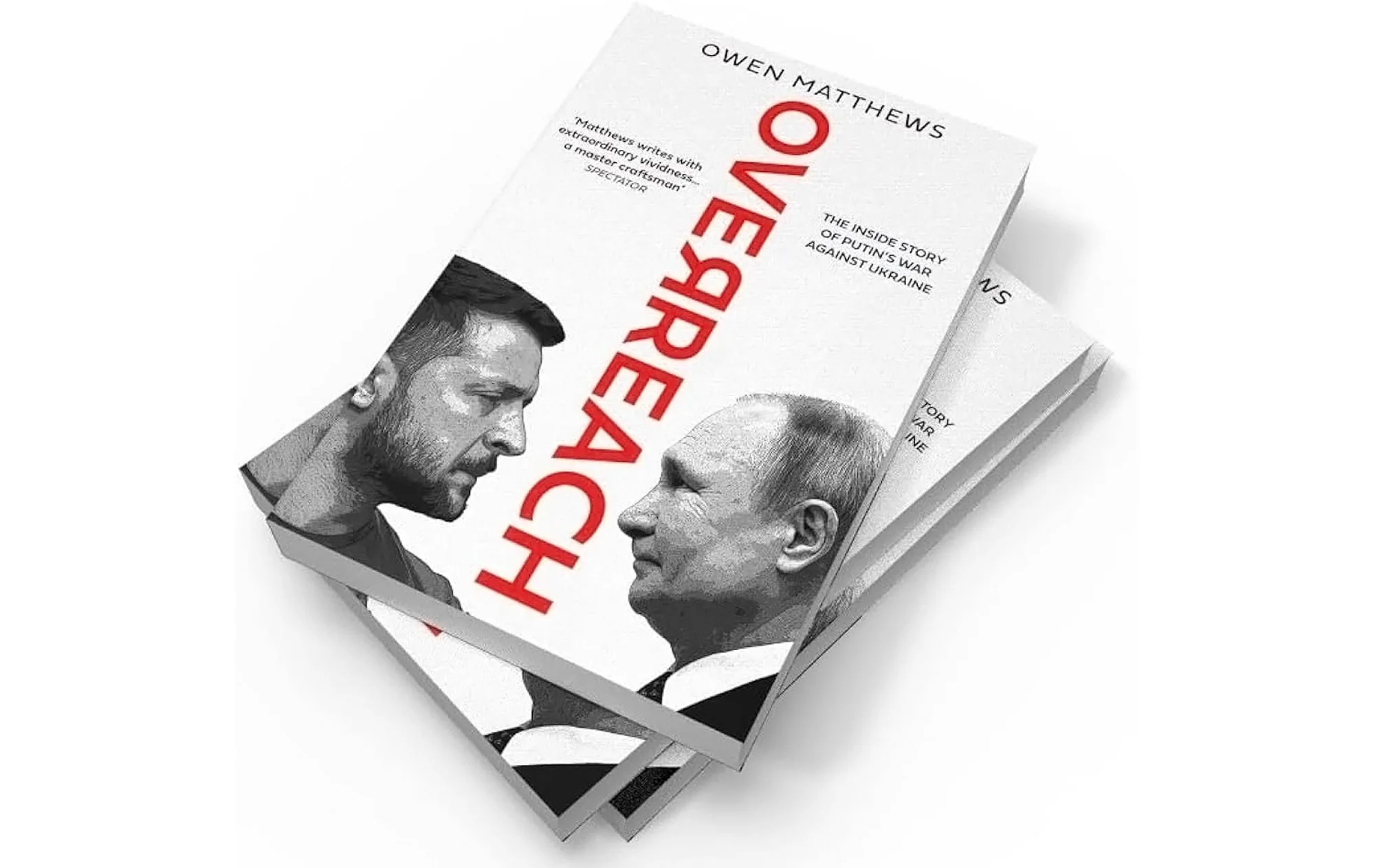
Overreach: Inside the Delusion: What “Overreach” Reveals About Putin’s War

Matthews, Owen. Overreach: The Inside Story of Putin’s War Against Ukraine (2023). - Image by amazon.com.

I recently came across Overreach: The Inside Story of Putin’s War Against Ukraine by Owen Matthews — a book that reads with the fluency of frontline reporting and the authority of someone who has seen Russia from the inside. Matthews, a veteran Moscow correspondent, writes with speed and confidence, stitching together intelligence leaks, diplomatic whispers, and battlefield accounts into a sharp, coherent narrative.

At its best, Overreach captures the extraordinary convergence of misjudgments that led to the invasion: a leader sealed off from reality, an army unready for the war it was told to win in three days, and a West too entangled in its own cynicism to believe the warnings. Matthews reconstructs the atmosphere inside the Kremlin with the precision of a journalist who has cultivated his sources well. His portrait of Putin is chilling — not the omnipotent schemer of Western caricature, but an aging ruler trapped in his own mythology, convinced that history is waiting for his final act.

But this clarity comes at a price. Matthews’ narrative occasionally slides into neatness — a story too elegantly told for a conflict that remains chaotic, contradictory, and unresolved. The reader rarely encounters the moral murk, the grey zones of complicity and fatigue that define real war. Ordinary Russians appear mostly as footnotes to elite decision-making, and Ukraine’s agency, while acknowledged, is often framed as reaction rather than initiative. The analysis sometimes echoes the Western policy consensus more than it interrogates it.

Still, Overreach succeeds on its own terms: it’s a readable, intelligent account of how hubris, fear, and historical delusion collided in 2022. Matthews’ talent lies in connecting personalities to consequences, and his prose hums with restrained anger — the tone of someone who knows too well that none of this had to happen.

If the book has a lesson, it’s this: wars are rarely born of strategy alone, but of misread intentions and unchecked pride. Overreach reminds us that power, once convinced of its own inevitability, is already in decline.

Matthews, Owen. Overreach: The Inside Story of Putin’s War Against Ukraine (2023).

Ukrainians Strengthen Europe

Since the war forced millions of Ukrainians to leave their homes in 2022, their story in Europe has evolved far beyond one of refuge and survival. By 2025, they have become an undeniable force for economic growth, innovation, and cultural vitality across the continent.

In Poland alone, Ukrainians now make up around five percent of the workforce. In 2024 they contributed an impressive €3.6 billion in taxes and social security payments, according to a joint UNHCR–Deloitte report. Their labour and entrepreneurship boosted Poland’s GDP by 2.7%—and they did so without taking jobs away from Poles or depressing wages. Similar patterns are emerging in the Czech Republic, where studies show no negative impact on local employment, but instead a filling of critical labour shortages in logistics, healthcare, construction, and technical trades.

The entrepreneurial drive is equally remarkable. One in ten new businesses registered in Poland last year was Ukrainian-owned, from small tech firms to expanding restaurant brands like Lviv Croissants and Drunken Cherry, now opening outlets in Germany, France, Switzerland and even London. These ventures no longer cater only to Ukrainian communities; they target the wider European public with fresh ideas and a distinctive cultural flair.

This spirit of innovation is being noticed at the highest levels. In July 2025, the European Innovation Council committed €20 million to Ukrainian deep-tech start-ups in AI, robotics, biotechnology, and cybersecurity. Dozens of companies will receive up to €500,000 each to fast-track their products to market and forge international collaborations.

And beyond the economic data lies a powerful human story. The Sunflower Project, launched by the Tent Partnership for Refugees, is one of the largest employment initiatives for displaced Ukrainians in Europe. It aims to generate €2 billion in annual income for refugees, with a strong focus on Ukrainian women—many of whom arrived alone with their children. The project works with over 50 major European employers, including IKEA, H&M, Accenture, and Carrefour, to provide tailored job opportunities, language training, and childcare support. For example, in Germany, a major logistics company has hired over 300 Ukrainian women in supply chain roles, offering flexible schedules so they can balance work and family. In France, a retail chain partnered with the programme to create fast-track training for store managers, enabling qualified Ukrainian women to move into leadership positions within months. In the Netherlands, IT companies in the Sunflower network are tapping into the skills of Ukrainian software developers, connecting them with international clients and long-term career pathways.

Through work, entrepreneurship, and community involvement, Ukrainians are not just integrating—they are actively shaping Europe’s future. Their contributions are a reminder that migration, when met with opportunity, can spark mutual growth. The numbers tell one side of the story, but the energy, resilience, and creativity Ukrainians bring to their new homes may be their most lasting gift to Europe.

Further reading

Russia, The Eternal Return of Suppression: The Fuse to the Powder Keg - Russia Before 1917

Tsar Nicholas II

In the early 20th century, the Russian Empire was vast, diverse, and unstable — a giant straddling Europe and Asia, rich in resources yet poor in governance. Tsar Nicholas II sat atop an autocratic system that resisted meaningful reform, even as the world around it modernized. The gap between the ruling elite and the majority of the population was staggering.

A Land of Peasants and Aristocrats
Over 80% of Russians were peasants, living in rural villages bound by centuries-old traditions. Many still carried the memory of serfdom, abolished only in 1861, and freedom had brought little improvement. Small plots, heavy taxes, and outdated farming methods left millions in chronic poverty. Meanwhile, a tiny aristocracy — less than 2% of the population — owned vast estates and enjoyed lives of comfort and privilege.

Industrialization Without Inclusion
By the late 1800s, Russia was industrializing, but unevenly. St. Petersburg and Moscow had textile mills, metal works, and railways. Harsh factory conditions, long hours, and low pay bred resentment among workers. The new urban proletariat had no political voice; trade unions were illegal, strikes often met with armed force. Russia’s economic modernization created the very class that would later become the backbone of revolutionary movements.

The Empire of Many Nations
Russia was not a homogeneous state. It ruled over Poles, Ukrainians, Balts, Finns, Armenians, Georgians, and Central Asian peoples — many of whom resented Russian dominance. Nationalist movements grew in strength, often clashing with the imperial government, which sought to “Russify” minorities by imposing the Russian language and Orthodox religion.

1905: The First Shockwave
The Russo-Japanese War (1904–1905) was meant to project imperial power but ended in humiliation. The defeat sparked unrest at home, culminating in the events of January 9, 1905 — “Bloody Sunday” — when troops fired on peaceful demonstrators in St. Petersburg. Nationwide strikes, mutinies, and uprisings followed. The tsar reluctantly granted a parliament, the Duma, but its powers were limited, and opposition parties were repressed. The monarchy had dodged collapse, but its legitimacy was badly weakened.

World War I: The Breaking Point
When war broke out in 1914, patriotism ran high, but Russia’s military was poorly equipped and badly led. Casualties mounted into the millions. The home front suffered from food shortages, inflation, and collapsing transport networks. By 1916, the tsar’s decision to take personal command of the army tied him directly to its failures. Meanwhile, political intrigue in the capital, symbolized by the influence of the mystic Rasputin, discredited the monarchy further. The empire was a powder keg — and the spark was coming.

Further Reading:

  • Orlando Figes – A People’s Tragedy (1996)

  • Hugh Seton-Watson – The Russian Empire 1801–1917 (1967)

  • S. A. Smith – Russia in Revolution (2017)

Russia, The Eternal Return of Suppression: Placing the War in Ukraine in Historical Context

When Russia launched its full-scale invasion of Ukraine on February 24, 2022, it was more than a war between two countries. It was the most direct challenge to Europe’s post–Cold War order, the most violent conflict on the continent since the Second World War, and a shockwave with global repercussions.

For many, the war seemed to erupt suddenly — a bolt from the blue. But the roots of this confrontation run deep, woven through a century of revolutions, wars, ideological struggles, and shifting borders. To understand the decisions being made today in Moscow, Kyiv, Brussels, and Washington, we must first understand how we got here.

This series of blogs is meant to provide that context. It will trace the modern history of Russia, Ukraine, and the wider post-Soviet space from the last years of the tsars to the present day. It is not just a story of leaders and battles, but of societies in transformation — and of how history shapes political choices, national identities, and international relations.

Why Ukraine Matters to the World
Ukraine’s struggle is not only about its own survival. It is also about:

  • Whether borders in Europe can be changed by force.

  • Whether smaller nations have the right to choose their alliances without pressure from larger neighbors.

  • How the outcome of this war will influence the future of European security, global trade, and the balance of power between democracies and autocracies.

What This Series Covers
The historical arc will be told in a number of blog items, beginning with the social and political forces that led to the Russian Revolution of 1917, and moving through the rise of the Soviet Union, the Cold War, the collapse of the USSR, the chaotic 1990s, and Russia’s resurgence under Vladimir Putin — culminating in the events of 2014, the invasion of 2022 and the mess we are in today.

Anne Applebaum on Why Putin Refuses Peace

Anne Applebaum.

Anne Applebaum has argued that one of the biggest mistakes in understanding the war in Ukraine is to see it as a struggle over territory. Russia already stretches across eleven time zones, with vast regions it can barely populate. It does not “need” Donetsk, Crimea, or any other piece of land. For Putin, the war is not about geography but about power—the power to dominate Ukraine and pull it back into Russia’s orbit.

This is why talk of “land for peace” has always missed the point. Even when Western leaders hinted at deals that would have given Moscow large concessions, Putin was uninterested. He still believes he can win outright. That belief rests on a simple calculation: Americans are unreliable, Europeans are weak, and Ukrainians will eventually be bombed, starved, or demoralized into submission. If victory is still within reach, why settle?

Applebaum likens the war to France’s colonial fight in Algeria. Imperial powers often cling to the illusion that colonies can be held against their will. But just as Algeria was not French, Ukraine is not Russian. Both wars reveal the same truth: occupation cannot manufacture belonging. The question is not whether Moscow will one day accept this, but when.

Until that reckoning comes, Applebaum warns, hopes for quick ceasefires or neat compromises are illusions. Russia will only stop when defeat becomes undeniable, and the West’s task is to hasten that realization.

Further Reading

  • Anne Applebaum, Twilight of Democracy: The Seductive Lure of Authoritarianism (2020)

  • Anne Applebaum, Red Famine: Stalin’s War on Ukraine (2017)

  • Timothy Snyder, The Road to Unfreedom: Russia, Europe, America (2018)

  • Serhii Plokhy, The Gates of Europe: A History of Ukraine (2015)

  • Mark Galeotti, Putin’s Wars: From Chechnya to Ukraine (2022)

  • Michael Kimmage, Collision: The War in Ukraine and the Origins of the New Global Instability (2023)

Ptaha: A Choir of Resilience and Heritage

In the wake of the brutal Russian invasion, a group of courageous women who fled Ukraine found solace and strength in music. Brought together in Roermond by Peter Driessen, these women formed the choir Ptaha, a name that symbolizes their journey and resilience. Ptaha, meaning "bird" in Ukrainian, aptly represents their spirit of freedom and the beauty of their homeland's culture.

Specializing in Ukrainian folk music, Ptaha brings to life the rich, melodic traditions of their country. Their performances are deeply evocative, often accompanied by the hauntingly beautiful sounds of the bandura, a traditional Ukrainian instrument. This combination of vocal and instrumental music not only preserves their cultural heritage but also creates a poignant reminder of the homeland they had to leave behind.

For the members of Ptaha, the choir is more than just a musical ensemble; it is a sanctuary. Amidst the chaos and trauma of displacement, singing together provides a crucial sense of community and emotional relief. The shared act of making music helps them maintain their mental well-being, offering moments of joy and connection during these incredibly challenging times.

Through their performances, Ptaha not only honors the traditions of Ukraine but also embodies the resilience and hope of its people. Their songs tell stories of love, loss, and the enduring spirit of a nation, resonating with audiences and providing a powerful testament to the strength and solidarity of the Ukrainian community.